Gaulish Paganism
Site Maintenance
A place to explore the Gods, traditions, practices, and worldview of Gaulish Paganism.Whether you are new to the path or have walked it for years, you are welcome here.Enter the Nemeton.
Who Were the Ancient Gauls?
The Gauls were Celtic-speaking peoples who inhabited much of Western and Central Europe during the Iron Age and into the Roman period. The area the Greeks and Romans called Gaul covered much of what is now France, Belgium, Luxembourg, Switzerland, and neighboring parts of Germany and northern Italy.[1]The Gaulish language belonged to the Celtic branch of the Indo-European language family and was related to other ancient Continental Celtic languages, including Celtiberian and Lepontic. Gaulish continued to be spoken alongside Latin well into the Roman period before eventually disappearing as a spoken language.[2]It is important, however, not to imagine the Gauls as one nation.There was no single country of Gaul with one ruler, one government, or one religious tradition. The Aedui, Arverni, Carnutes, Treveri, Sequani, Remi, Helvetii, and many others were distinct peoples with their own territories and political interests.Even Julius Caesar begins his Gallic War by distinguishing different populations within Gaul and noting differences in their languages, customs, and laws.[3] Caesar was writing as a Roman general engaged in conquering these peoples, so his divisions should not simply be accepted as an objective map of Gaulish identity. Still, his account makes something important clear: diversity existed within the world that Rome called Gaul.These peoples traded, formed alliances, competed for influence, and sometimes fought one another. At the same time, similarities in language, material culture, art, and religious practice connected communities across large areas.It may therefore be more helpful to think of the Gauls as many interconnected peoples rather than one unified nation.
Life in Gaul
Popular culture has often portrayed the Gauls primarily as warriors living in small villages at the edge of the civilized world. Modern archaeology has given us a much richer picture.Gaul was heavily agricultural. Farms and rural settlements covered the countryside, while increasingly intensive agriculture supported growing populations during the later Iron Age. Archaeological evidence shows expanding field systems, animal husbandry, iron agricultural tools, grain storage, and the cultivation of increasingly large areas of land.[4]The Gauls were also accomplished craftspeople. Metalworking, pottery, woodworking, textiles, glassworking, coinage, and other crafts formed part of increasingly complex local and regional economies.Trade connected Gaul with neighboring Celtic-speaking regions and with the Mediterranean world long before the Roman conquest. Goods, technologies, ideas, and people moved along rivers and overland trade routes.By the later Iron Age, larger settlements had also developed in many regions.
Oppida
Archaeologists commonly use the Latin word oppida for many of the large fortified settlements that appeared during the later Iron Age. These places were not simply forts. Some served as political and economic centers, places of craft production and trade, and gathering places for surrounding populations. Their character differed considerably from one region to another, and not every oppidum should be imagined as a city in the Roman sense.[5]Excavations at places such as Bibracte and Corent have revealed substantial settlements together with monumental public and religious spaces.[6] The Dêuoi were not worshipped by people living in some timeless wilderness separated from ordinary society. Religious activity existed alongside farms, workshops, settlements, political centers, roads, rivers, marketplaces, and households.The sacred was part of life.
Society and Politics
Political organization differed from one Gaulish people to another and changed over time. Ancient sources describe kings, aristocratic families, councils, assemblies, magistrates, factions, and shifting alliances. We should therefore be cautious about imagining a single “Gaulish government.”A particularly interesting example comes from the Aedui.Caesar describes their highest magistrate by the title Vergobret, from Gaulish Uercobretos. He tells us that this magistrate was chosen annually and possessed considerable judicial authority.[7] Elsewhere Caesar describes rules governing how the office was filled and restrictions placed upon those holding it.[8]The Uercobretos should not simply be described as the Gaulish word for “king” or “chieftain.” It was a particular magistracy known especially from the Aeduan political system.Even Vercingetorix, the most famous Gaulish leader today, was not originally king of a united Gaul. He was an Arvernian leader who succeeded in bringing numerous peoples into an alliance against Caesar in 52 BCE. Other peoples remained aligned with Rome, remained outside the revolt, or changed sides as circumstances developed.[9]Again, we encounter the same pattern, Gaul was connected, but it was diverse.
Religion in Gaul
There was no single universal Gaulish pantheon. The surviving evidence instead reveals a religious landscape filled with many Dêuoi, some appearing across broad areas and others closely associated with particular communities or places. Our evidence comes from several different directions: archaeology, inscriptions, images, ancient literature, place-names, and the surviving fragments of the Gaulish language.Archaeology has revealed sanctuaries ranging from intimate religious spaces associated with settlements to large communal cult places. Deposits of weapons, animal remains, jewelry, coins, vessels, and other objects show that sacrifice and offering formed important parts of religious activity.[10] The landscape itself could also participate in religious life. Archaeological research has found regional patterns involving springs, caves, wetlands, and other natural settings, although we should be cautious about assuming that every unusual natural place was automatically considered sacred.[11]One of the most important lessons from modern archaeology is that Gaulish religion was both connected and regional. Different areas do not always give us the same kinds of sanctuaries, offerings, or religious evidence.[12]The Gauls left us no surviving sacred book explaining exactly what they believed or why they performed particular rituals. We have pieces. Our task is to understand those pieces without pretending that the gaps between them do not exist.
Druids, Uâtîs, Gutuatir, and Bards
Greek and Roman writers describe several kinds of learned and religious specialists among the Gauls.One of the clearest accounts comes from the Greek geographer Strabo, who describes three groups held in particular honor: Bards, Vates, and Druids. He describes the Bards as singers and poets, the Vates as concerned with divination, sacrifice, and the study of nature, while the Druids additionally studied moral philosophy and were trusted with the settlement of disputes.[13]These descriptions are valuable, but they come from outsiders. We do not know how rigidly the Gauls themselves divided these roles, whether every Gaulish people possessed the same institutions, or how these roles changed over time.They give us a place to begin.
Drûides — The Druids
The Druids are the best documented of these learned groups.Caesar describes them as involved with sacred matters, public and private sacrifices, religious interpretation, teaching, and the settlement of disputes. He says that they could judge cases involving crimes, inheritance, and boundaries and could impose religious penalties upon those who refused their decisions.[14]Caesar also says that many young people came to them for instruction. Some, he claims, spent as long as twenty years learning a large body of material by memory. Although writing was used for other purposes, Caesar says that Druidic teachings themselves were not normally committed to writing.[15]He further attributes to their teaching discussions concerning the stars and their movements, the size of the cosmos and earth, the nature of things, the Gods, and the immortality of the soul.[16]Caesar even tells us that Druids gathered at a consecrated place within the territory of the Carnutes to hear disputes.[17]We should remember that Caesar was not a neutral observer. He was the Roman general responsible for the conquest of Gaul, and scholars continue to debate how accurately his neat description represents the actual complexity of Gaulish religious institutions.Nevertheless, his account remains one of our most substantial ancient sources.The name Druid is itself a subject of linguistic debate.The Celtic form is generally analyzed as containing an element connected with seeing or knowing, while the first element has traditionally been associated with the oak, strength, or firmness. This has produced interpretations such as “oak-knower” or “strong knower.”[18]Linguist Xavier Delamarre has proposed another interpretation connecting the name with Indo-European cosmology and the idea of a World Tree.[19]That proposal is particularly interesting for modern traditions that understand Drus as the World Tree, but it remains a linguistic interpretation rather than an ancient Gaulish definition preserved for us in a text.We also know the name of at least one historical Gaul whom an ancient writer identifies as a Druid:Diviciacus of the AeduiCicero says that he knew Diviciacus personally and identifies him as a Druid. He describes Diviciacus as knowledgeable about the natural world and able to predict future events through augury and interpretation.[20] Caesar also knew Diviciacus and mentions him repeatedly as an important Aeduan political leader, diplomat, and Roman ally. Interestingly, Caesar never calls him a Druid.Diviciacus gives us an important glimpse of a historical Druid who was not removed from society. He participated directly in politics, diplomacy, and the affairs of his people.
Uâtîs — The Seers
The Uâtîs, represented in Greek and Latin sources as Vates or Ouateis, were particularly associated with divination.Strabo describes the Vates as diviners who were also concerned with sacrifice and the study of nature.[21] The word belongs to an old Indo-European family associated with prophecy, inspired speech, and religious inspiration. Related Celtic forms include Old Irish fáith, meaning a prophet or seer.[22] The word can carry ideas of heightened or inspired states. Because of this, translations such as “seer” or “inspired one” may communicate the role more clearly to a modern reader.Exactly how Gaulish Uâtîs practiced divination is much less certain.The ancient sources give us glimpses of prophecy, sacrifice, augury, and the interpretation of signs, but they do not leave us a complete Gaulish system of divination.
Gutuatir — The Invoker
Another religious title known from Gaul is Gutuatir. The evidence for this role is much thinner than the evidence for Druids or Uâtîs.The word is attested epigraphically, while related literary evidence has generated scholarly debate over whether Gutuater should always be understood as a title or sometimes as a personal name.[23]Linguistic analysis connects the word with gutu- and atir, leading to interpretations such as “invoker” or “father of invocation/prayer.”[24]This suggests a religious role connected with calling upon or invoking the Gods.Beyond that, caution is necessary.We do not possess enough evidence to reconstruct a detailed Gutuatir priesthood or to say exactly how this role related to the Druids and Uâtîs. Sometimes a title survives while the institution behind it remains largely hidden.
Bardos — The Bards
The Bardos, or Bards, were poets and singers. Strabo explicitly describes the Bards in this way.[25] Their importance, however, probably went beyond what we would today call entertainment.Within societies where knowledge and memory could be transmitted orally, poetry and song could preserve names, reputations, stories, ancestry, social values, and memories of important events. Praise could elevate someone's reputation. Satire could damage it.The Bard stood somewhere at the meeting point of memory, poetry, reputation, and community.Again, we should resist making these categories too rigid.The ancient sources tell us that Bards, Vates, and Druids existed. They do not give us an organizational chart explaining every relationship between them.
Women and Religious Authority
Women also appear within the surviving evidence for Celtic prophecy and religious activity.One particularly fascinating account comes from the first-century Roman geographer Pomponius Mela. Mela describes an island called Sena, generally associated with the Île de Sein off the coast of Brittany. He says that the island belonged to a Gaulish divinity and was famous for an oracle served by nine priestesses.[26]According to Mela, these women were renowned for prophecy and healing. His account also attributes far more fantastic powers to them, including stirring the seas and winds and changing themselves into animal forms.[27]That means we need to read the account carefully.Greek and Roman geographical literature frequently included stories of wonders, strange customs, and supernatural people living at the edges of the known world. We cannot automatically treat every miraculous element as straightforward ethnography.Nor does Mela call these women Druids or Uâtîs. We should be careful not to give them titles the source does not give them.What the source does tell us is interesting enough:A Roman author believed there was a Gaulish oracle on Sena served by a group of women associated with prophecy and healing.That alone shows us that the surviving picture of Gaulish religious authority should not be restricted entirely to men.
A World of Many Peoples
Perhaps the most important thing to remember about the Gauls is their diversity. There was no single Gaulish kingdom. There was no single political system. There was no single universal pantheon.And there is little reason to imagine that every Gaulish community practiced religion in the same way.Modern archaeology repeatedly reveals regional differences in settlements, sanctuaries, ritual practices, and material culture, even while broader patterns connect different parts of Gaul.[28]This gives us a useful way to approach reconstruction today.We can begin broadly with the ancient Celtic-speaking world. From there we can narrow our focus to Gaul, then to particular regions and peoples, and eventually to local and household traditions.At every step, we ask the same question:What does the evidence actually allow us to say? Sometimes it gives us a remarkably detailed answer. Sometimes it gives us only a name carved into stone. And sometimes the most responsible answer is simply, we don't know.
Ancient Sources
[3] Julius Caesar, De Bello Gallico 1.1.
Caesar's opening geographical and ethnographic description of Gaul, including his statement that the populations he distinguishes differed in language, customs, and laws.[7] Caesar, De Bello Gallico 1.16.
Describes the Aeduan chief magistracy called the Vergobret, stating that the magistrate was appointed annually and possessed substantial judicial authority.[8] Caesar, De Bello Gallico 7.32–33.
Describes a disputed Aeduan election and rules governing the highest magistracy.[9] Caesar, De Bello Gallico Book 7, especially 7.4, 7.55, 7.63–64.
Evidence for Vercingetorix, the coalition against Rome, and the complicated political allegiances of the Gaulish peoples.[13, 21, 25] Strabo, Geography 4.4.4.
One of the principal ancient descriptions of Bards, Vates, and Druids.[14–17] Caesar, De Bello Gallico 6.13–14.
Caesar's principal description of Druidic religious duties, adjudication, education, oral learning, gathering in Carnute territory, and teachings concerning the soul, cosmos, nature, and Gods.[20] Cicero, De Divinatione 1.41.90.
Cicero identifies Diviciacus of the Aedui as a Druid whom he knew and associates him with natural knowledge, augury, and divination.[26–27] Pomponius Mela, De Chorographia 3.48.
Describes Sena, its oracle of a Gaulish divinity, and nine priestesses associated with prophecy, healing, and marvelous powers.
Modern Scholarship & References
[1] Ralston, Ian. “Central Gaul at the Roman Conquest: Conceptions and Misconceptions.” Antiquity 62 (1988): 786–797.
Useful for understanding the complexity and regional development of late Iron Age Gaul and for avoiding overly uniform models of “Gallic society.”[2] Blom, Alderik H. “Gaulish in the Late Empire (c. 200–600 CE).” In Languages and Communities in the Late-Roman and Post-Imperial Western Provinces. Oxford University Press, 2023, 129–154.
A recent examination of the survival of Gaulish alongside Latin and the difficult evidence surrounding its eventual disappearance.[4] Haselgrove, Colin, and Vincent Guichard. “Les Gaulois sont-ils dans la plaine? Reflections on Settlement Patterns in Gaul in the 1st Century BC.” In L’âge du Fer en Europe: Mélanges offerts à Olivier Buchsenschutz. Pessac: Ausonius Éditions, 2024, 317–327.
Useful for rural settlement, agricultural intensification, field systems, population, and changes in settlement during the later Iron Age.[5–6] Olivier, Laurent. “Gallic Archaeology Today.” Aux sources de l’Archéologie nationale, French Ministry of Culture.
Provides a concise archaeological overview of the transformation in our understanding of pre-Roman Gaul, including farms, small towns, oppida, craft production, trade, and monumental religious spaces at sites including Corent and Bibracte.[10–12, 28] Arcelin, Patrice, and Jean-Louis Brunaux. “Un état des questions sur les sanctuaires et les pratiques cultuelles de la Gaule celtique.” Gallia 60 (2003): 5–8; and “Sanctuaires et pratiques cultuelles: L’apport des recherches archéologiques récentes à la compréhension de la sphère religieuse des Gaulois.” Gallia 60 (2003): 243–247.
These studies introduce and synthesize a major regional archaeological survey of Iron Age sanctuaries and religious practices. They are particularly useful for understanding both broader patterns and substantial regional variation.[18] Delamarre, Xavier. Dictionnaire de la langue gauloise: Une approche linguistique du vieux-celtique continental. 2nd rev. and expanded ed. Paris: Errance, 2003.
A major linguistic reference for Gaulish vocabulary and etymology. It should be remembered that etymological reconstructions are scholarly interpretations rather than ancient definitions.[19] Delamarre, Xavier. “Cosmologie indo-européenne, Rois du Monde celtiques et le nom des druides.” Historische Sprachforschung 112, no. 1 (1999): 32–38.
Presents Delamarre's interpretation of the name of the Druids in relation to Indo-European cosmology and the World Tree.[22] Delamarre, Xavier. Dictionnaire de la langue gauloise. 2nd ed. Paris: Errance, 2003.
Used here for Gaulish linguistic material surrounding uātis and related Celtic vocabulary.[23] Goudineau, Christian. “Le gutuater gaulois: idéologie et histoire.” Gallia 60 (2003): 383–387.
Discusses the difficult historical evidence surrounding the gutuater and the interpretation of the title in literary and epigraphic sources.[24] Delamarre, Xavier. Dictionnaire de la langue gauloise. 2nd ed. Paris: Errance, 2003, 184.
Discusses gutuater/gutuatir and its linguistic formation.
A Note on These Sources
The Greek and Roman writers cited here were outsiders. Caesar, in particular, was writing about peoples he was actively conquering. Their accounts are valuable evidence, but they are not neutral descriptions or Gaulish sacred texts.Archaeology presents a different kind of evidence, but archaeological remains must also be interpreted. Linguistic reconstruction has similar limitations, and scholars sometimes disagree about the meanings of Gaulish words.The purpose of providing these references is not to say that every question about the Gauls has been settled. It is to show where the information comes from. You are encouraged to follow the sources, question the interpretations, and explore the evidence for yourself.
What is Gaulish Paganism?
Gaulish Paganism is a modern Pagan tradition rooted in what survives of the traditions and cultures of the ancient Gauls. There is no single way to practice it.Some people approach Gaulish Paganism primarily through historical reconstruction. Others focus on the traditions of a particular Gaulish people or region. Some belong to modern communities with their own developing traditions, while others build practices around their household, the Dêuoi they worship, and the places where they live.These approaches can look quite different from one another, but they grow from many of the same ancient roots. For most of us, those roots come to us in fragments.Archaeology gives us sanctuaries, offerings, ritual deposits, and other traces of ancient practice.[1] Inscriptions preserve divine names, dedications, and other evidence, particularly from the Roman period.[2] Greek and Roman writers provide outside descriptions of Gaulish customs, beliefs, practices, and specialists.[3] The surviving Gaulish language gives us another important, though fragmentary, source of evidence.[4]None of these gives us a complete picture of how the ancient Gauls understood and interacted with the Dêuoi (gods) and the world around them.What they give us are pieces. From those pieces, modern Gaulish Pagan traditions have developed. This means Gaulish Paganism should not be understood as an ancient tradition that survived unchanged into the present. Nor are we trying to recreate every detail of life in Iron Age Gaul.We are practicing in the present. The ancient evidence gives us roots. Reconstruction helps us understand those roots. Living tradition allows them to continue growing.
What Does Reconstruction Mean?
When I use the word reconstruction, I am not talking about rebuilding a lost tradition exactly as it was. We simply cannot do that. Reconstruction is a method. We gather the fragments that survive: archaeology, inscriptions, ancient literature, linguistics, comparative material, and what we know about particular peoples, places, sanctuaries, and Dêuoi.Then we ask what those pieces can reasonably tell us.This is necessary because we do not possess a large surviving body of Gaulish mythology, ritual instructions, or writings explaining how the ancient Gauls understood their traditions and worldview.Caesar tells us that Druidic education was largely oral and that their teachings were not normally committed to writing, although writing was used for other purposes.[3] Much of what we know therefore has to be pieced together from material remains, inscriptions, images and divine names, fragments of language, and accounts written by Greek and Roman authors.[1–4] That changes what reconstruction can accomplish. We might have evidence for a practice at one sanctuary, an inscription somewhere else, a description preserved by a Classical author, and evidence for a particular Dêuos scattered across several regions.We can compare those pieces, look for patterns, and use them to build a historically grounded modern practice.But there is something important to remember: The reconstruction is not the evidence itself. When we bring different pieces together into a larger system, we have already begun interpreting them.That does not make reconstruction unreliable or meaningless. It simply means we should be honest about what we are doing.Reconstruction helps us build. It does not give us permission to fill the gaps and then pretend the gaps were never there.
Was There One Gaulish Tradition?
Probably not in the sense of a single standardized tradition practiced identically throughout Gaul. The ancient Gauls were many peoples living across different regions and communities. Archaeological research shows regional variation in sanctuaries and practices, while also revealing some patterns that appear across wider areas of Celtic Gaul.[1]So when we use a broad phrase such as “Gaulish Paganism” today, we are bringing together evidence from many different ancient Gaulish peoples, places, and periods. That does not mean there was nothing shared between them.Communities interacted with one another, and some practices and cultural patterns appear across considerable distances.[1] But something found widely across Gaul should not automatically be treated the same way as something known from one sanctuary, one inscription, or one particular people.This is one of the central challenges of reconstruction. Rather than choosing between combining everything into one universal system or reconstructing only one tiny locality, I find it useful to think in layers.We can begin broadly and then move inward.There may be evidence found across different parts of Gaul. From there, we can look at what belongs more specifically to a region or Toutâ, then to a local community or sanctuary, and eventually to the household and individual practitioner.
Where Does the Evidence Come From?
BROAD — Evidence found across multiple regions or communities.
REGIONAL OR TOUTÂ-SPECIFIC — Evidence particularly associated with a region, people, or cultural area.
LOCAL — Evidence connected with a particular sanctuary, settlement, spring, community, or other place.
These tell us where and how widely something is attested. Then we can ask the next question.
What Are We Doing With That Evidence?
ATTESTED — Directly supported by ancient literature, inscriptions, archaeology, language, or iconography.
RECONSTRUCTED — A modern interpretation or practice developed from historical evidence, linguistics, comparative study, or several pieces of evidence brought together.
LIVING TRADITION — Contemporary practice, theology, community tradition, household tradition, or personal gnosis.
These categories can overlap. Something can be regional and attested. A ritual can be reconstructed from broadly attested evidence. A household tradition can be modern while drawing inspiration from a local ancient practice. The point is not to put everything into neat boxes. The point is to be clear about where something comes from.
Reconstruction and Living Tradition
Historical evidence gives us a foundation, but it cannot answer every question we have today. The surviving evidence simply isn't complete enough to do that. Some people identify specifically as Gaulish Reconstructionists, with historical reconstruction serving as the primary framework through which they develop their practice. Others use reconstruction as one method within a broader Gaulish Pagan or Gaulish Polytheist practice. That is generally the approach taken on this site.We begin with the evidence whenever possible, but we also recognize that Gaulish Paganism is being practiced now, by people living in very different places and circumstances from the ancient Gauls. Living traditions include adaptation, interpretation, community traditions, household customs, and personal experience alongside historical reconstruction.This also leaves room for gnosis. Gnosis can be a meaningful part of our relationships with the Dêuoi, Ancestors, spirits, and the world around us, but it should not be turned into ancient history. If I experience a Dêuos in a particular way, that experience may become deeply important within my practice. It does not mean an ancient Gaul living two thousand years ago necessarily understood that Dêuos in exactly the same way.The same principle applies to modern traditions. If a community creates a ritual today, we can simply say: We created this ritual today. If it was inspired by ancient evidence, we can explain what evidence inspired it. There is no need to give modern practices an artificial antiquity. Something does not become less meaningful simply because it is new.
Many Branches from Ancient Roots
There is no single way to “do Gaulish” today. Different modern traditions may emphasize different Dêuoi, regions, ritual forms, ideas, and relationships with reconstruction. That does not mean one of them has to become the universal form of Gaulish Paganism. Think of it like a tree. The surviving evidence gives us the roots. From those roots, different branches can grow. One branch may remain very close to archaeological reconstruction. Another may develop around a particular Toutâ or region. Another may be shaped by the traditions of a community. Another may grow around a household and its relationships with particular Dêuoi, Ancestors, spirits, and places. They do not have to become identical branches to belong to the same tree. What matters is being honest about where our practices come from. We can build living Gaulish traditions from the fragments that survive without turning our modern synthesis into an artificial universal tradition that probably never existed in that form. The goal is not to rebuild the past and live inside it. The goal is to give the ancient roots good soil in which to grow today.
What Does Gaulish Pagan Practice Look Like?
There is no single required practice. A simple Gaulish Pagan practice can be surprisingly uncomplicated. You might make an offering, speak a prayer, spend time learning about a Dêuos, remember your Ancestors, or establish a small sacred place in your home. Practice can also extend beyond the altar.Your practice happens where your feet are.You might care for a place, clean a stream, tend a garden, prepare food for others, learn a skill, keep a promise, create something with your hands, or simply spend time paying attention to the world around you.Archaeological and literary evidence shows that offerings and sacrifice formed part of ancient Gaulish practices.[1][3] The surviving evidence, however, does not give us a single handbook telling modern practitioners exactly how those practices should be reproduced today.How we adapt ancient practices to modern life is part of the work of reconstruction and living tradition. That is something explored more fully throughout the rest of this site.
So, Where Do I Begin?
You do not need to memorize a pantheon, reconstruct an Iron Age ritual, learn Gaulish, purchase elaborate ritual tools, or understand every question about the Dêuoi and worldview before you start.Choose something small.Learn about one Dêuos who interests you. Read about the ancient evidence connected with them. Set aside a simple place for prayer or offerings. Make a small offering and introduce yourself.Then keep learning.Explore who the ancient Gauls were. Meet the Dêuoi. Learn about worldview, sacred space, ritual, offerings, and the different ways modern practitioners have brought these ancient roots into the present.Read. Ask questions. Pay attention to the evidence. Learn from other practitioners while remembering that their experiences belong to them.And allow your own practice to grow. There are no surviving instructions telling us exactly how a person in the twenty-first century must become a Gaulish Pagan. You do not need to have everything figured out before taking your first step. The path is built through walking it.
Sources and References
[1] Archaeology, Sanctuaries, and Ancient PracticeArcelin, Patrice, and Jean-Louis Brunaux. “Un état des questions sur les sanctuaires et les pratiques cultuelles de la Gaule celtique.” Gallia 60 (2003): 5–8.Arcelin, Patrice, and Jean-Louis Brunaux. “Sanctuaires et pratiques cultuelles: L’apport des recherches archéologiques récentes à la compréhension de la sphère religieuse des Gaulois.” Gallia 60 (2003): 243–247.These studies are useful for understanding archaeological evidence for sanctuaries and ancient practices, regional variation, broader patterns, and the need to bring different categories of evidence together when interpreting the ancient Gaulish world.[2] Divine Cults and Roman GaulDerks, Ton. Gods, Temples and Ritual Practices: The Transformation of Religious Ideas and Values in Roman Gaul. Amsterdam Archaeological Studies 2. Amsterdam: Amsterdam University Press, 1998.Derks focuses particularly on divine cults, ritual practices, local identities, and cultural change among the populations of northern Gaul under Roman rule.Van Andringa, William. La religion en Gaule romaine: Piété et politique (Ier–IIIe siècle apr. J.-C.). Paris: Errance, 2002.Van Andringa examines cult, practice, community organization, and change in Roman Gaul using archaeological and epigraphic evidence.[3] Ancient Literary SourcesJulius Caesar. De Bello Gallico, Book 6, especially 6.13–18.Caesar describes Druids, their instruction and teachings, sacrifice, beliefs concerning the soul, teachings about the cosmos and nature, and several Gods as he understood them. He also states that Druidic teachings were normally transmitted orally rather than committed to writing.Caesar was a Roman general writing about peoples he was actively conquering, so his account is important evidence but should not be treated as a neutral Gaulish account.Strabo. Geography 4.4.4.Strabo describes Bards, Vates, and Druids and associates them with poetry, divination, sacrifice, natural philosophy, moral philosophy, and beliefs concerning the soul and cosmos.[4] Gaulish Language and Linguistic ReconstructionDelamarre, Xavier. Dictionnaire de la langue gauloise: Une approche linguistique du vieux-celtique continental. 2nd revised and expanded ed. Paris: Errance, 2003.A major reference work for Gaulish vocabulary, names, and etymological analysis.Matasović, Ranko. Etymological Dictionary of Proto-Celtic. Leiden/Boston: Brill, 2009.A comparative linguistic reference for reconstructed Proto-Celtic vocabulary and its reflexes in the individual Celtic languages.xt
A Note on Sources
What survives from the ancient Gaulish world is incomplete.Greek and Roman writers provide valuable testimony, but they were outsiders writing for their own audiences and purposes. Archaeology and inscriptions bring us closer to the communities themselves, but material evidence still requires interpretation. Linguistic reconstruction has its own uncertainties, and modern scholars do not always agree.For that reason, throughout this site I try to distinguish between:ATTESTED — what the surviving evidence directly supports.RECONSTRUCTED — what we can reasonably build or interpret from that evidence.LIVING TRADITION — what modern practitioners, households, and communities have developed or experienced.The sources are not here simply to say, “This is correct.” They are here so you can follow the evidence, question the interpretation, and come to your own conclusions.
Triskelion: Symbol of the three realms and the cycles of life, movement, and transformation.
Torc: A sacred neck ornament representing many aspects of practice.
Carnyx: A war trumpet symbolizing courage, communication, and the rallying of spiritual or communal strength.
Oak: A sacred tree embodying wisdom, strength, and endurance, often seen as a teacher of life’s eternal cycles.
Wheel: A symbol of time, cosmic order, and the ever-turning cycles of the seasons and fate.
Sacred herbs also play a significant role:
Mistletoe: Revered as the all-healing plant and a meaningful offering when gathered personally.
Mugwort: A herb for fostering divine connection and intuition.
Juniper: Used for its powerful cleansing and protective properties.
Gaulish Paganism recognizes the comos as a reflection of the divine or the divine itself. Rivers, mountains, forests, even certain actions and concepts are seen as sacred embodiments of divine presence, calling practitioners to live in balance with the natural world. Living in harmony with nature is both a spiritual and ethical commitment, fostering a deep respect for its rhythms and cycles.Life is seen as a journey of transformation. Moral and ethical practices are central to this path, emphasizing the cultivation of virtues such as courage, wisdom, and integrity. These virtues guide personal growth and enrich communities, aligning practitioners with the cosmic order and the sacred harmony of existence.
Gaulish Paganism is guided by several key Core Beliefs and Principles:
The Divine Cosmos
The world is a sacred, interconnected whole shaped by two cosmic forces: Samos (order, creation, light) and Giamos (chaos, transformation, darkness). These principles influence all aspects of life, from the changing seasons to the balance of the soul, creating a dynamic interplay that drives existence.
The Three Realms (Drus)
The cosmos is divided into three interconnected realms, unified by Drus, the World Tree:
Albios (The Upperworld/Celestial Realm): The divine, ordered realm of the gods.
Bitus (The Middle World/Material Realm): The earthly domain where humans and nature dwell.
Dubnos (The Underworld): The mystical realm of spirits, ancestors, and hidden mysteries.
Antumnos (The Otherworld)
A liminal realm where all things converge, Antumnos lies beyond the material realms of Dubnos, Bitus, and Albios. It is the heart of the cosmic structure, centered within the Drus, acting as a bridge connecting all realms to this transformative Otherworld.
The Soul and After
The soul is dynamic and cyclical, transitioning through states of existence in harmony with nature’s rhythms.
At death in this world, one is born into Antumnos, and upon death in Antumnos, one is reborn here.
This process reflects the belief in the transmigration of the soul, emphasizing eternal flow and transformation.
Some traditions describe the soul as multiple parts, while others as a unified whole.
Fire and Water
The elements of fire and water are central to Gaulish Paganism, symbolizing creation and transformation:
Fire: Represents light, life, and divine connection.
Water: Symbolizes purification, healing, and life’s flow.
Rituals often incorporate these elements, honoring their harmonious dance. The Druids teach that the cosmos was created through the union of fire and water and will eventually dissolve through them as well.
The Directions
The cardinal directions hold deep spiritual significance, each representing a unique force:
Are (East): New beginnings, illumination, and the celestial (Samos). This is the direction one faces (if you can) when praying and doing rites.
Dexsiuos (South): Warmth, vitality, and prosperity. The south is associated with the right side, which affirms, seals, and declares what has been set in motion.
Eri (West): Darkness, transformation, and the mystical (Giamos). This is the direction of the ancestors, and one can face this direction for rites of the deceased.
Tutos (North): Wildness, challenges, and untamed forces. The north is also associated with the left side, which calls, receives, and opens the way.
Medios (Center): Balance and connection between all realms.
The Three Laws (Trirextoues)
The Druids imparted three sacred laws to guide our lives:
Honor the Gods.
Do no evil.
Practice virtue.
These laws embody respect, integrity, and living in harmony with both the natural and spiritual worlds.
Order (Assus)
Central to Gaulish Paganism is the concept of Assus, which represents the natural order and laws of the cosmos. It governs the harmony between all realms and guides ethical and spiritual practices. Assus reminds us to align with the universe’s inherent balance, ensuring that our actions uphold the order of the world and our communities.
The Gifting Cycle (Cantos Roti)
Reciprocity is a cornerstone of Gaulish spirituality, captured in the phrase:
"You give so that I may give. I give so that you may give."
This principle emphasizes mutual respect between humans, the gods, spirits, and ancestors. Offerings are given to maintain balance and to seek blessings, guidance, and favor.
Worshiped Beings
Gaulish Paganism honors a group of deities (dêuoi), each connected to specific aspects of life, nature, and the cosmos. These deities embody natural forces, virtues, and mysteries. Worship often involves offerings, rituals, and fostering personal or communal relationships with them. It’s important to note that the list of deities is not exhaustive, nor does it represent a uniform group. The Gauls did not organize their gods into a single mythological framework like the Greeks or Romans. Many deities were specific to particular tribes or regions, with some sharing similar attributes but bearing different names. Over time, the roles and characteristics of these deities could shift, influenced by geography and cultural exchange.In addition to the deities, Gaulish Paganism acknowledges other beings:
Bituatîs (Land Spirits) - These include spirits of rivers, valleys, gardens, flowers, homes, and forests, embodying the sacredness of the natural world.
Anderoi (Those Below) - Beings such as dwarves and mound spirits who are connected to the earth and its hidden mysteries.
Antumnatîs (Those of Antumnos) - Otherworldly spirits residing in the liminal realm of Antumnos. These include the Dusios, mischievous beings reminiscent of satyrs, and the Matican (Horned Serpent), a mysterious creature representing untamed wilderness and the protector of sacred spaces.
These beings, whether divine or otherworldly, defy rigid categorization. They are fluid, flowing between realms and embodying the interconnectedness of existence.Before we delve into the main list of deities, it is important to acknowledge the primordial beings—those ancient and foundational deities who embody the very essence of existence. These divine figures are the cornerstones of creation and the forces that shape the cosmos itself.
Litauiā- The Earth Mother, embodying the land and all its bounty. She is a nurturing and sustaining force, offering life, stability, and connection to all living beings.
Dêiuos - The Sky Father, a manifestation of the Proto-Indo-European Dyeus. He embodies Aððus, the sacred order of ritual and cosmic structure, representing the guiding and protective force of the heavens.
Sonnos - The Sun, a radiant and empowering force. He illuminates the world and strengthens the dêuoi associated with light, vitality, and growth, marking the passage of day and the cycles of life.
Lugrâ - The Moon, a mysterious and guiding presence. She governs the passage of time, the rhythms of nature, and the reflective qualities of wisdom and intuition.
Major Gaulish Deities
Taranos- The Thunderer, associated with storms, the sky, and cosmic order. He wields lightning as a symbol of his power and is a protector of the people.
Sucellos - The Good Striker, often depicted with a mallet or hammer. He is associated with boundaries, prosperity, agriculture, and the cycle of life and death. His companion is Nantosueltā.
Nantosueltā - A goddess of nature, valleys, and domestic harmony. Often linked to funerary customs, she is sometimes portrayed with a dovecote or a beehive.
Carnonos - The Horned God, a liminal figure associated with forests, animals, and the Otherworld. He stands at the crossroads between the material and spiritual realms, embodying connection and transformation.
Belinos - The Shining One, a solar deity linked to light, healing, and vitality. He represents the warmth and life-giving energy of the sun.
Sironā - A goddess of healing springs and health, often associated with sacred waters and rejuvenation. She symbolizes purification and renewal.
Epona - The Great Horse Goddess, protector of horses, travelers, and fertility. She is a guardian of journeys and a psychopomp and a symbol of abundance.
Lugus - A multi-skilled deity associated with craft and innovation. Lugus is often seen as a patron of creativity, trade, and intellect.
Rosmertā - A goddess of plenty, wealth, and well-being. Often depicted with a cornucopia, she represents abundance and prosperity and his the companion of Lugus.
Grannos - A deity of healing waters and thermal springs. Grannos is often invoked for health and the restorative powers of sacred water. He is the companion of Sironā.
Toutatis - A guardian of the tribe and its people. Teutatis is a protector in battle and a symbol of communal strength and unity.
Arduinna - The goddess of forests, hunting, and wild animals. She is often depicted riding a boar and symbolizes the untamed power of nature.
Abnoba - A goddess associated with the hunt, rivers, mountains, and the wilderness. She represents the natural world’s mystery and the sacredness of the land.
Brigindū - A goddess of high places, bridges, and transitions. She is connected to wisdom, crafts, and warfare.
Gobannos - The divine smith, Gobannos is the patron of craftsmanship and creation, forging tools, weapons, and sacred items with skill and artistry.
Bricta - Bricta governs the magical currents and powers of transformation. She is invoked for her abilitiy to enchant as she is the goddess of magic.
Suleuiâs - The Good Guides, Suleuiâs are a set of three radiant goddesses—or sometimes a singular divine figure—who provide guidance, warmth, and protection on the path of life.
The Matronae - The Mothers are Triple goddesses of fertility, protection, and abundance, the Matronae are guardians of family and community.
Ogmios - God of eloquence and persuasion, Ogmios is a guide for communication and wisdom, depicted with chains linking him to his followers through speech. He is a Psychopomp meaning he is a guide of souls.
Aisus - A deity of work and nature, Aisus is often associated with strength, labor, and the connection between humanity and the natural world.
Nemetonâ - The goddess of sacred groves, Nemetonâ is the guardian of Nemetons, places of worship, and liminal spaces.
Artio - A bear goddess of abundance and protection, Artio symbolizes the strength and nurturing spirit of the wild.
Camulos - A war deity associated with the might of battle and protection, Camulos is also seen as a guardian of sovereignty and leadership.
Carvonia - Goddess of deer and the forest, symbolizing gentleness, grace, and the spirit of the wild.
Maponos - A youthful deity of poetry, inspiration, and music. He represents the vitality of creativity and connection to the arts.
Loucetios - A god of lightning and storms, often associated with swift action and the transformative power of lighting. He is the companion of Nemetona.
Smertrios - A god of war and strength, often depicted wielding a club. He embodies martial power, protection, and the destruction of obstacles, particularly those that harm the community or sacred spaces.
Moccus - God of boars, abundance, and fertility, often connected to hunting and feasting.
Visucius - God of commerce, wealth, and prosperity.
Ucuetis - A God linked to craftsmanship and artisans.
Bergusia - A goddess associated with abundance, trade, and partnership she is the companion of Ucuetis.
Your Nemeton
How you set up your Nemeton is up to you. It may shift with the seasons or change with what is going on in your life. There is no right or wrong way, and when you start, you may not have much, that’s okay. What matters is participating in Cantos Roti (the gifting cycle) to build good relations (Sumatreiâ).Below are some words that can help guide you in your Gaulish practice (Ateurextu) as you set up your space for Dugiion, worship.
Nemeton – sacred space - The area made holy by ritual; in home practice, this is the Uentâ when the Aidû burns and the rite is active. The Nemeton exists through action, not through objects left in place.
Uentâ – place of offering/sacrifice - The ritual surface where right action is performed, not just a place to store objects.
Aidonâ – hearth goddess / sacred fire personified. Represents the living flame (Aidû) and the witness of ritual. You may have another name for her.
Aidû – flame / fire - The fire that burns on the Uentâ, representing life, presence, and the sacred.
Dagilâ – candle - Used to represent Aidonâ in home practice; a small, manageable fire source.
Cumbâ – bowl / valley - A vessel placed on the Uentâ to receive offerings (Addatus).
Addatus – offering / gift - The act of giving to the gods or ancestors; placed in the Cumbâ or directly on the Uentâ.
Deluâs – images / representations - Optional markers of relationship or focus, not necessary for ritual.
Dugiion – worship / enactment of devotion - The ritual action itself, which makes the space sacred.
Ari – East - The direction associated with light, order, and beginnings; used to orient the Uentâ.
Gaulish Hearth Rite
Rituals (Adaððus) honor the gods, spirits, and ancestors through offerings such as food, drink, incense, or handmade items. Don’t worry too much about what to offer at first; over time, as you build a relationship with the divine, you’ll come to know what is most meaningful. These offerings are acts of reciprocity, acknowledging that we give so the gods and spirits may give in return. In this rite, you will encounter Aidonâ, the sacred flame personified. You may refer to her by any name you feel called to. It is preferable to face East, the direction of new beginnings and Samos.The ritual structure below is not attested, but it's based on and inspired by the PIE (Proto Indo European) ritual structure. Cleaning / Purification, Opening / Sanctifying the Space, Prayer (Invocation, Argument, Petition), Offering, Closing of Prayer, and finally Closing the Ritual.This rite is not a mandate. You need not follow this exactly. Its purpose is to support.Below, we will use Carnonos (Cernunnos) as an example for this simple rite.
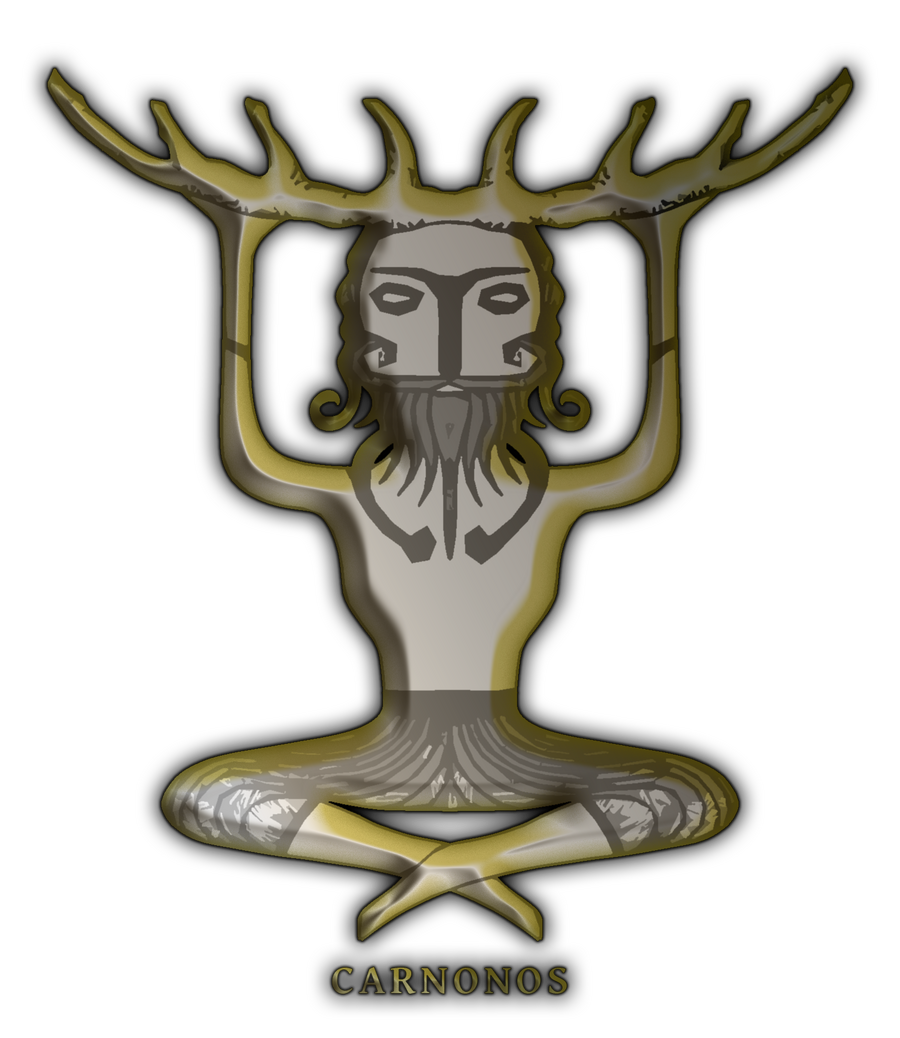
Purification and Cleansing
Perform a symbolic cleansing to prepare body, mind, and soul:
Opening the Nemeton
Light a candle, fire, or symbolic flame. Say:"I light this sacred flame, may you brighten and guide."
If space allows, make three sunwise (clockwise) circles around the Dagilâ (altar), or trace three sunwise circles with your hand to honor the three realms of Drus (Albios, Bitus, and Dubnos).
Say:"Sacred flame, center and illuminator, you connect all.
Your flame brings life, warmth, and guidance.
Thank you for brightening this sacred space.
May my prayers be carried to the divine."Offer incense, dried herbs, or another token to the flame.
Invocation to Carnonos
Raise your hands or bow in reverence. Say:"Carnonos, Lord of the liminal, Keeper of the threshold,
Guide of realms seen and unseen,
You who dwell in the in-between,
I call to you, revered one."
Offering and Gratitude
"You who stand at the crossroads of Drus,
May your wisdom illuminate my path.Make an offering to Carnonos (such as bread, honey, or another meaningful token). Say:"With this gift, I honor you,
Carnonos, keeper of the balance true.
For the blessings of life, the wisdom of the wild,
I offer my gratitude, humble and mild."
Request and Reflection
Take a moment to state a personal request, seek guidance, or reflect silently. You may say:"Carnonos, through your realm of stillness and motion,
Grant me insight and devotion.
Guide my steps through the web of fate,
To walk with purpose, love, and grace."
Closing the Rite
Express gratitude to Carnonos and the sacred flame. Say:"Carnonos, liminal one, I thank you for your presence.
Sacred flame, I thank you for your light.
As I close this rite, may your blessings remain with me."Extinguish the sacred flame, symbolizing the conclusion of the rite. Say:"In your name, this rite is done,
May peace and balance be with me."Reflect on any insights or feelings from the ritual. Offerings should be returned to nature respectfully, such as leaving them by a tree or burying them in the earth. This hearth rite offers a foundation that can be adapted for special occasions, additional deities, or seasonal celebrations.
Gaulish Adoration Rite
Not all ritual is spoken. Some is carried through the body itself, through breath, gesture, and movement. Just as words hold power, so too does the way we move, turn, and present ourselves before the Dêuoi.In Gaulish practice, we have attested evidence that devotion was expressed not only through offerings and prayer but also through physical action, the raising of the hands, the turning of the body, and the alignment of oneself with the order of the world. These movements are reflected in classical accounts and inscriptions, showing that gesture itself was a meaningful part of ritual life.These actions are not separate from ritual, but are ritual.What follows is a simple form of embodied devotion, inspired by attested practices. It can stand on its own or be woven into other rites, allowing the practitioner to step into alignment through movement, intention, and presence.
Orientation
Face East, the direction from which the gods rise and all blessings flow.Gesture of Reverence
Raise the left hand to the lips, Potî Uediās, the Kiss of Offering.
Hold a silent moment of respect. Release the kissAlignment
Step with the left foot and turn sunwise (dexsiuos) once in place (or three times).
Extend both palms outward and upwards towards the sky or downwards to the earth, opening yourself up.Optional Invocation "Meaning you do not need to do an invocation"
O Gods, hear me
Strengthen my heart
Guide my mind
Steady my hands
Guard my soul
Keep me in virtue
Reveal the way
Walk with me
I go with you all.“I give so that you may give.
You give so that I may give.”SealWith the right hand, give another Kiss of Offering, this time a declaration rather than an invocation.
Sertom ē “So be it.”
Gaulish Paganism encompasses a wide variety of forms and practices, with no single, definitive path to follow. While some traditions may offer more structured approaches, no one tradition is inherently more valid than another. The content on this site provides foundational basics to make Gaulish Paganism more accessible and easier to explore.
Now that you have learned some basics take a place within the Nemeton, where the ethereal flames beckon, inviting you to delve into the enchanting richness of contemporary Gaulish Paganism. Embark on a journey through Stories, Myths, Invocations, Rituals, Spells, Art, Magic, and scholarly wisdom bestowed upon us by the diverse community of Gaulish Paganism.
Head on over to our main site to learn more.
Gaulish Polytheism.com